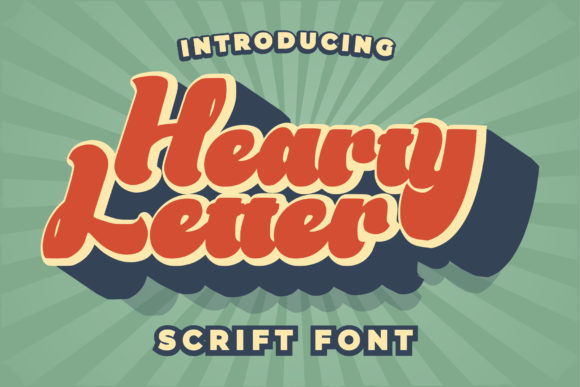
Hearty Letter: A Font That Elevates Your Brand's Visual Story
I remember the day I decided to refresh my bakery’s packaging. It wasn’t a dramatic moment, just one of those quiet realizations that something needed to change. My labels looked good, but they felt... generic. I wanted my brand to stand out, to feel warm and inviting, like the first bite of a fresh croissant. That’s when I discovered Hearty Letter, a thick lettered, retro styled handwritten font from Script Amp.
Hearty Letter has this strong, confident, and dynamic energy to it. It reads like someone took a pen and paper and wrote with purpose—each stroke feels intentional, nostalgic, and full of character. It’s not just a font; it’s a voice for your brand.
How Hearty Letter Changed My Bakery’s Look
I started by applying Hearty Letter to my product labels. The old font was clean, but it didn’t reflect the cozy, artisanal vibe I wanted. With Hearty Letter, the words “Freshly Baked” on my bread boxes suddenly felt more personal, almost like a hand-written note from a friend. It added that little extra touch of warmth that made customers pause and smile.
The same font worked wonders on my social media posts too. I used it for headlines and captions, and the response was immediate. People commented on how much they loved the look of my posts—it felt more authentic, more connected. It wasn’t just about looking good; it was about feeling right.
Where Can You Use Hearty Letter?
Hearty Letter is incredibly versatile. Here are a few places where I’ve used it successfully:
- Logo Design: A bold, readable logo with a vintage charm.
- Product Labels: Adds personality to your packaging without overwhelming the design.
- Thank-You Cards: Makes every note feel more heartfelt and genuine.
- Café Menus: Gives your menu a friendly, approachable look.
- Social Media Graphics: Perfect for headlines or call-to-action buttons.
- Website Banners: Draws attention with its strong visual presence.
It’s especially great for display text, headlines, or any place where you want to make an impression. But I always pair it with a clean sans serif font for body text to keep things readable and balanced.
Why Typography Matters for Small Businesses
I used to think typography was just about making things look pretty. But now I know it’s so much more than that. The right font can shape how people see your brand, how they feel about it, and even how they interact with it. Hearty Letter helped me create a consistent look across all my materials—from my website to my thank-you cards.
Consistency is key in branding. When your visuals are cohesive, it builds trust and recognition. Customers start to associate your font with your brand, which makes them more likely to remember you and come back.
Readability also matters, especially on smaller screens or printed labels. Hearty Letter is legible enough for short phrases and titles but still has that artistic flair. I make sure to use it sparingly on mobile-friendly designs and avoid using it for long paragraphs where clarity is essential.
Tips for Using Hearty Letter Effectively
If you’re thinking about using Hearty Letter, here are a few tips to help you get the most out of it:
- Check the file formats: Make sure you have access to all the necessary styles, weights, and alternates for your specific needs.
- Consider font pairing: Pair Hearty Letter with a clean sans serif font for a modern yet nostalgic look.
- Use it for display purposes: It works best as a headline or accent font rather than for large blocks of text.
- Ensure commercial licensing: If you're using it for products, packaging, or client work, confirm that the font comes with proper commercial rights.
When I first downloaded Hearty Letter, I wasn’t sure if it would fit my brand. But after testing it on different projects, I realized how well it complemented my overall aesthetic. It wasn’t just a font upgrade—it was a confidence boost for my entire brand identity.
Typography might seem small, but it plays a big role in how your business is perceived. With Hearty Letter, I found a way to express my brand’s personality in a way that felt both professional and personable. And that, I think, is the real power of good design.